As an Amazon Associate we earn from qualifying purchases. Learn more.
Edge vs End-Grain Cutting Boards: Which Is Best for Durability? (2026 Comparison)
Choosing between edge-grain and end-grain cutting boards matters for durability, knife wear, and how much time you’ll spend maintaining the wood. This comparison looks at three real boards—two John Boos edge-grain maple options and an Ironwood end-grain acacia board—so you can see how grain type, thickness, and care affect longevity and performance. Products were selected for representative sizes, construction (edge vs end grain), and real customer feedback on durability, look, and maintenance. Read on to see side-by-side differences in wear, knife friendliness, and upkeep, plus which board to buy for your kitchen.
Quick Answer
For durability and knife-friendliness, the Ironwood Gourmet End Grain Acacia (B000TZ0IQC) is the best pick — end-grain construction absorbs cuts and is gentler on knives. If you want a sturdy, American-made edge-grain workhorse on a budget, the John Boos Chop-N-Slice 16x10 (B00063QBL8) is the value pick.
Our Top Picks
Quick Comparison
Select 2-3 products to compare side-by-side
| Compare | Product | KitchenGauge Score | Price Tier | Key Feature | Best For | Action |
|---|---|---|---|---|---|---|
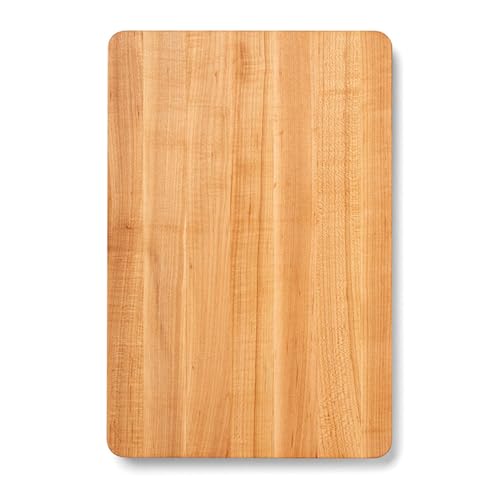 John Boos 18x12 Edge-Grain
|
Mid-Range | Reversible edge-grain maple surface | Home cooks who want a sturdy prep board | Check Price | ||
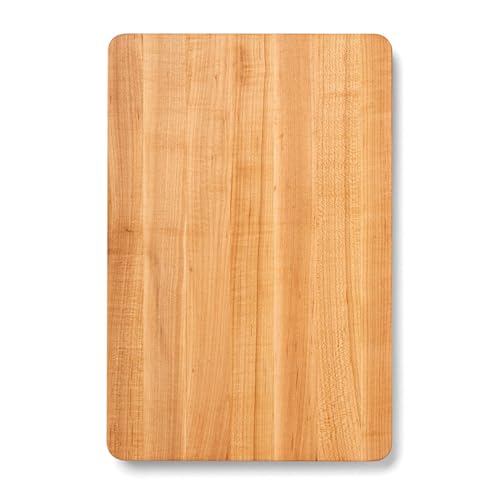 John Boos 16x10 Edge-Grain
|
Budget | Compact reversible edge-grain maple | Buyers needing an affordable, everyday prep board | Check Price | ||
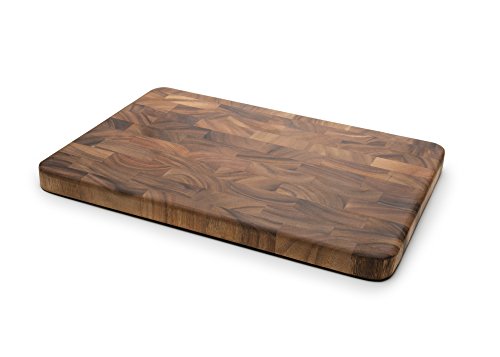 Ironwood End-Grain Acacia
|
Premium | End-grain acacia build that’s knife-friendly | Cooks who prioritize knife longevity and durability | Check Price |
1. John Boos Chop-N-Slice Series Rectangular Wooden Maple Cutting Board 18x12 1.25 Thick, 8-lb Reversible Butcher Block with Eased Corners & Edge-Grain Made in the USA
A heavy, well-finished edge-grain maple board built for daily prep and serving. It gives a stable, level surface and classic look; expect routine oiling and hand-washing to prevent warping. Compared with end-grain boards, it’s slightly more resistant to surface gouges but can show longer knife marks over time.
Key Specs
- Construction: Edge-grain maple, reversible sides
- Dimensions: 18 x 12 inches; 1.25-inch thickness
- Finish & Care: Oiled finish; hand-wash only; use board oil/cream
- Made: Manufactured in the USA; eased corners for handling
Pros
- More cutting surface than the 16x10 John Boos model
- Heavier and more stable on counters than the lighter budget option
- Better surface hardness than many budget plastic boards
Cons
- Less forgiving on knife edges than end-grain (Ironwood)
- Can warp or split if not regularly oiled and dried properly
Best For: Home cooks who want a sturdy prep board
Check Latest Price on Amazon2. John Boos Chop-N-Slice Series Rectangular Wooden Maple Cutting Board 16x10 1 Thick, 4.5-lb Reversible Butcher Block with Eased Corners, Edge-Grain Made in the USA
A compact edge-grain maple board that balances cost and craftsmanship. Customers praise its finish and sturdiness for routine kitchen tasks; it weighs less and is more portable than the larger Boos model. Like most wooden boards, it needs hand-washing and periodic oiling to avoid cracking and warping.
Key Specs
- Construction: Edge-grain maple, reversible sides
- Dimensions: 16 x 10 inches; 1.0-inch thickness
- Finish & Care: Oil finish; hand-wash only; recommended board oil
- Made: American-made Chop-N-Slice series with eased corners
Pros
- Cheaper entry to a high-quality branded maple board than the 18x12
- Lighter and easier to store/handle compared with larger models
- Good finish and looks for serving as well as prep
Cons
- Thinner than the 18x12 — less mass to resist warping over time
- Can develop splits or bowing if neglected or stored damp
Best For: Buyers needing an affordable, everyday prep board
Check Latest Price on Amazon3. Ironwood Gourmet Large End Grain Prep Station Acacia Wood Cutting Board, 14 x 20-Inch, Brown
A large end-grain Acacia prep station designed to be gentle on knives and durable under heavy use. End-grain blocks absorb cuts and hide knife marks, which reduces dulling and can extend both board and blade life. Requires similar hand-wash care and regular oiling; some users report surface roughness or occasional splitting if not maintained.
Key Specs
- Construction: End-grain acacia (butcher block style)
- Dimensions: 20 x 14 x 1.25 inches
- Finish & Care: Natural oil finish; hand-wash, dry immediately; apply oil periodically
- Use: Prep station, carving, and serving — multi-functional
Pros
- More knife-friendly than both John Boos edge-grain models
- End-grain hides cuts and minimizes visible wear better than edge-grain
- Premium look and larger prep area than the smaller Boos board
Cons
- Higher price tier than the John Boos boards
- Can show scratches or develop splits if not oiled and dried correctly
Best For: Cooks who prioritize knife longevity and durability
Check Latest Price on AmazonWhich One Should You Choose?
If your priority is the longest-lasting surface for heavy chopping and the gentlest option for your knives → choose the Ironwood Gourmet End Grain Acacia (B000TZ0IQC). Its end-grain construction hides cuts and reduces blade dulling. If you want a dependable, American-made edge-grain board with more surface area but still good durability → choose the John Boos Chop-N-Slice 18x12 (B00063QBKY). If budget, portability, and an affordable branded maple board matter most → choose the John Boos Chop-N-Slice 16x10 (B00063QBL8). In short: pick Ironwood for knife care and long-term surface condition, pick the larger Boos for stable everyday prep, and pick the smaller Boos when cost and storage are priorities.
Best for Specific Scenarios
- Frequent home chef who values knife sharpness: Ironwood Gourmet End-Grain (B000TZ0IQC) because end-grain is gentler on blades and hides cuts.
- Home cook wanting a stable, all-purpose prep board: John Boos 18x12 (B00063QBKY) because the heavier, thicker edge-grain surface stays flat and doubles as a serving board.
- Small kitchen or budget-conscious shopper: John Boos 16x10 (B00063QBL8) because it’s compact, lighter, and offers John Boos craftsmanship at a lower price tier.
Frequently Asked Questions
How often should I oil a wooden cutting board?
Oiling frequency depends on use; for active daily use, oil once a month. For occasional use, oil every 2–3 months. Apply food-safe butcher block oil or board cream, let it soak, then wipe off excess.
Will end-grain boards dull my knives less than edge-grain?
Yes. End-grain boards present the wood fibers vertically so your blade cuts between fibers rather than across them, which reduces friction and keeps edges sharper longer compared with most edge-grain boards.
Can I put these boards in the dishwasher?
No. All three boards require hand-washing with mild soap, immediate drying, and regular oiling. Dishwashers expose wood to high heat and prolonged moisture, which causes warping and splitting.
How We Selected These Products
Our recommendations are based on data-driven analysis: we evaluated 67623+ products across 9192+ brands using a composite scoring system that weighs rating (40%), review volume (30%), price value (20%), and demand signals (10%). Every product is ranked by data, not opinions.
Last updated: August 22, 2026
As an Amazon Associate we earn from qualifying purchases at no extra cost to you. Full disclosure.
KitchenGauge Score is our editorial ranking based on a composite analysis of product quality, value, and verified customer sentiment. Click through to Amazon for current pricing, availability, and live customer reviews.