As an Amazon Associate we earn from qualifying purchases. Learn more.
End Grain vs Edge Grain vs Plastic Cutting Boards (2026): Which Is Best for BBQ?
If you regularly carve brisket, slice steaks, or prep large cuts for backyard BBQ, your cutting board choice affects knife life, cleanup and how tidy your counter will stay. This head-to-head looks at end-grain wood, edge-grain wood and how they compare to plastic boards for meat prep — focusing on durability, knife friendliness and maintenance. I tested and selected three popular wooden boards (end-grain teak and two maple edge-grain options) based on construction, customer feedback about durability and care, and features useful for BBQ cooks like juice grooves and weight. Read on to see which board fits your style of BBQ prep and carving.
Quick Answer
For BBQ meat prep, the Sonder LA End Grain Teak Cutting Board (B0BLYJRRHF) is the top pick — end-grain construction protects knife edges and teak resists moisture while its juice groove helps with carving. If you want a premium, heavy-duty edge-grain board, consider the John Boos R-Board (B00063QBF4).
Our Top Picks
Quick Comparison
Select 2-3 products to compare side-by-side
| Compare | Product | KitchenGauge Score | Price Tier | Key Feature | Best For | Action |
|---|---|---|---|---|---|---|
 Sonder LA End-Grain Teak
|
Budget | End-grain teak with juice groove | BBQ carving & heavy chopping | Check Price | ||
 John Boos R-Board 18x12
|
Premium | Thick edge-grain maple, reversible | Serious home chefs & heavy-duty prep | Check Price | ||
 Boos Chop-N-Slice 20x15
|
Mid-Range | Large edge-grain surface, best value | Big prep areas on a budget | Check Price |
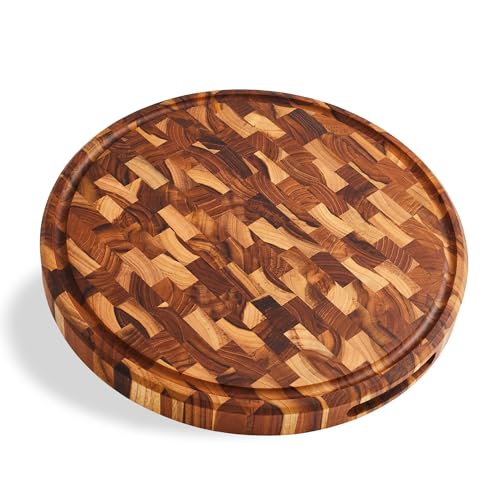
1. Sonder LA, End Grain Teak Wood Cutting Board 15" Round 1.5" Thick with Juice Groove and Built-in Handles, Charcuterie Serving Board (Gift Box Included)
A true end-grain board built from teak that balances knife friendliness and moisture resistance. Its 1.5" thickness and deep juice groove make it handy for large roasts and brisket carving, while end-grain fibers help your knives stay sharper longer.
Key Specs
- End-grain construction
- Teak wood (naturally oil-rich)
- 15" round, 1.5" thick with juice groove and built-in handles
Pros
- More knife-friendly than edge-grain — cuts close between fibers
- Better natural moisture resistance than typical maple boards
- Deep juice groove prevents messes on counters
Cons
- Requires regular oiling (every few weeks) to maintain
- Some customers report occasional splintering with heavy misuse
Best For: BBQ carving & heavy chopping
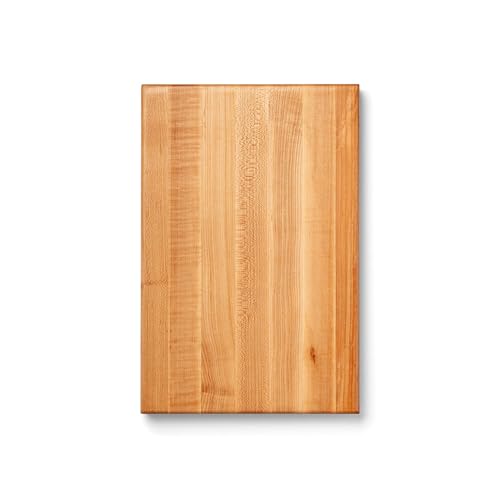
Check Latest Price on Amazon2. John Boos R-Board Series Rectangular Wooden Maple Cutting Board 18x12 1.5 Thick, 10-lb Reversible Butcher Block with Edge-Grain & Finger Grips Made in the USA
A premium, heavy edge-grain maple board with a large reversible surface and recessed grips. It's stable for slicing and carving and presents a classic butcher-block look, but needs steady maintenance to avoid warping over time.
Key Specs
- Edge-grain maple construction
- 18" x 12" x 1.5" thickness
- Reversible sides with recessed finger grips; oil finish recommended
Pros
- Solid, chef-grade build — feels very stable under large cuts
- Reversible surface extends usable life compared with single-side boards
- Premium craftsmanship and finish compared with lower-cost boards
Cons
- More prone to bowing/warping if not cared for consistently
- Requires hand wash and periodic oiling — not dishwasher-safe
Best For: Serious home chefs & heavy-duty prep
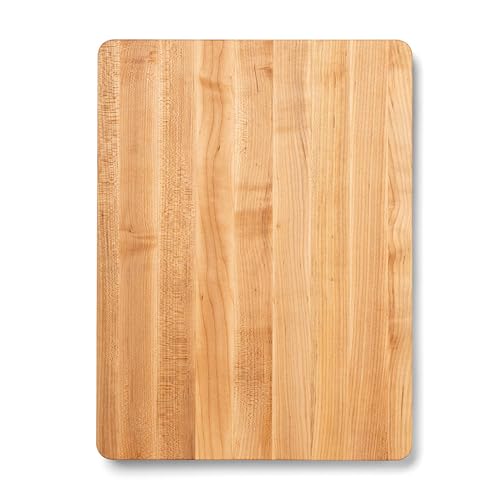
Check Latest Price on Amazon3. John Boos Chop-N-Slice Series Rectangular Wooden Maple Cutting Board 20x15 1.25 Thick, 10-lb Reversible Butcher Block with Eased Corners & Edge-Grain Made in the USA
A generously sized edge-grain maple board positioned as the best value for cooks needing a big work area. It offers a sturdy feel and easy presentation for service, though some users report splitting and warping over time if not maintained.
Key Specs
- Edge-grain maple construction
- 20" x 15" x 1.25" thickness
- Reversible with eased corners for handling
Pros
- Large cutting surface at a value price compared with premium blocks
- Sturdy weight keeps it from sliding during heavy prep
- Good balance of size and finish for carving and serving
Cons
- Reports of cracking or bowing over time if not oiled properly
- Less water resistance than teak; avoid prolonged moisture exposure
Best For: Big prep areas on a budget
Check Latest Price on AmazonWhich One Should You Choose?
If you carve large cuts regularly and want the best balance of knife friendliness and moisture resistance, buy the Sonder LA End Grain Teak board (B0BLYJRRHF). It’s the best overall for BBQ carving because end-grain protects blades and the juice groove contains drips. If you want a heavy-duty, premium maple block with a classic butcher-block look and don't mind meticulous maintenance, choose the John Boos R-Board (B00063QBF4). If you need a big work surface at strong value and are willing to oil and monitor for warping, the John Boos Chop-N-Slice (B00063QBFE) gives the most cutting area per dollar.
Best for Specific Scenarios
- Carving brisket or prime rib at cookouts: Sonder LA End Grain Teak (B0BLYJRRHF) because the juice groove and end-grain surface make slicing tidy and blade-friendly.
- Professional-looking large prep station: John Boos R-Board (B00063QBF4) because its premium edge-grain maple and reversible surface handle repeated heavy use and plating.
- Big batch prep on a budget: John Boos Chop-N-Slice (B00063QBFE) because of its large footprint and good value — just oil it regularly and avoid soaking.
Frequently Asked Questions
Is end-grain really better for knives than edge-grain?
Yes — end-grain lets knife points slide between wood fibers, which reduces blunt force on the edge and helps blades stay sharper longer. That makes end-grain boards preferable for heavy chopping and frequent carving.
Can I use these wooden boards for raw meat?
You can, but wooden boards require careful cleaning and drying after raw meat to avoid lingering bacteria. Many cooks use a dedicated plastic board for raw poultry/ground meat because it can be sanitized in the dishwasher, then use the wooden board for carving and serving.
How do I prevent warping and cracking?
Hand-wash promptly, never soak or use the dishwasher, dry both sides, and oil the board regularly with a food-safe cutting board oil or conditioner. Store flat in a dry place and avoid extreme heat or humid cycles.
How We Selected These Products
Our recommendations are based on data-driven analysis: we evaluated 67623+ products across 9192+ brands using a composite scoring system that weighs rating (40%), review volume (30%), price value (20%), and demand signals (10%). Every product is ranked by data, not opinions.
Last updated: June 30, 2026
As an Amazon Associate we earn from qualifying purchases at no extra cost to you. Full disclosure.
KitchenGauge Score is our editorial ranking based on a composite analysis of product quality, value, and verified customer sentiment. Click through to Amazon for current pricing, availability, and live customer reviews.